Two weeks ago Julie and I got on the road, leaving Sawtooth Valley for Missoula, Montana and Salmon, Idaho. We were on a mini book tour. I was reading from Journal of the Plague Years at Fact and Fiction, a Missoula bookstore, and a day later at the Salmon Public Library.
We were glad to be looking at new horizons. After a mostly warm and sunny February, March had brought storms. Mud season had been threatening every time the sun came out, winter every time it snowed. Three inches of new snow topped the driveway ice when we pulled onto the highway.
________
Once we reached Clayton, thirty miles downriver, we hit bare ground. Green grass was emerging on the roadsides. Buds were on the trees and bushes.
No high water. We’re not sure we’ll have any this year, due to the continent-sized drought we’re in.
We hit the snow again at Lost Trail Pass. We could see skiers riding the lifts of the resort that straddles the border between Montana and Idaho, but the runs weren’t as packed as they would have been on a powder day. Ten miles downhill into Montana, the fields were bare again.
It was a beautiful drive for the most part, but whole suburbs had sprung up in the Bitterroot Valley since I was there last. I was reminded that Jared Diamond’s 2005 doomsday book Collapse lists the valley as a place that could no longer support its population in the absence of industrial civilization.
By the end of the book, of course, he describes the whole world that way.
Snow was on the high mountains west of Hamilton and Darby and Florence. Cows and calves were thick in the bare boggy fields of working ranches.
Some fields were empty and greening. I assumed they were owned by newcomers, whose real jobs are in the financial or software or inheritance industries.
Those fields were waiting for enough spring grass to support horses brought in from more southern pastures. New ranch houses, many of them large log-and-rock mansions, looked unoccupied but well-maintained.
The scenery is marred here and there by non-maintained junkyards and decaying trailer houses, which indicate that gentrification hasn’t yet kicked out people authentically dependent on the hard work of agriculture or timber or salvage.
Gentrification hasn’t kicked Fact and Fiction out of its prime downtown location, either, although small and expensive boutiques have begun occupying nearby storefronts.
________
Missoula was where I got my MFA in 1987, and the place has changed enough in forty years that I was in the sad position of a lot of ex-students, wandering around campuses, classrooms, apartment buildings, and favorite bars, looking for familiar faces and not finding any.
I had been back once since graduation. When my 2003 book Traplines was published, I read at Fact and Fiction to a packed house. I saw people I’d gone to school with, and I signed a lot of books.
To paraphrase Thoreau, I’d written them all myself. When your books are selling, that’s a laugh line. When Thoreau said it, it was a rueful bit of irony engendered by 706 unsold copies of A Week on the Concord and Merrimack Rivers cluttering up his writing space. Never mind that these days any one of them would be the priceless centerpiece of a university’s rare book collection. Back when selling them all could have done Thoreau some good, he couldn’t give them away, though he no doubt tried.
________
Our first indication that this spring’s reading tour might not go well was when the Fact and Fiction people asked us if we knew seven or eight people who we could invite to the reading so we’d have an audience. As it happened, we knew three people in Missoula, and they all promised to bring friends, and ten people showed up. They were an appreciative audience, and they laughed at my jokes. We had a good time, but we didn’t sell that many books.
The next night, at the Salmon Library, the staff had come down with the flu, and the whole town had heard about it. I had an audience of two and we didn’t sell any books. The last time I’d read in Salmon had also been a packed house.
________
The book business has mutated beyond recognition since Netflix and Amazon have come on the scene. Bookstores are serving an increasingly geriatric and nostalgic clientele. Publishing has devolved into a handful of exploitative mega-corporations selling romantasy.
Not completely. But it will seem that way if you’ve got a Kindle. A not-so-subtle pressure to write something that will titillate is in the publishing zeitgeist and on the Kindle playlist. Publishers have whole research divisions specializing in what best excites the limbic system of their customers.
Now, professionals advise authors about Kindle strategies—book giveaways and limited-time specials—that will boost Amazon numbers.
Boosting the numbers is important. You can pay for reviews and send free copies to reviewers, but what will really attract attention will be a long string of reader reviews on your Amazon page, and those are hard to come by. What won’t boost your numbers much is reading to a dozen people in a small bookstore in a small city in the American West.
A book review in the New York Times will help, but the odds of getting one are slim and none. I’ve had one in my life, for my book titled Cheerleaders from Gomorrah, made up of satirical short stories about ski resorts in the American West. If you want to know who coined the phrase, “Lycra Archipelago,” it’s me. If you’d been reading the New York Times thirty years ago, you’d know that.
________
Journal of the Plague Years is a self-published book in three volumes, consisting of 158 journal entries starting in March of 2020 and ending four years later, in October of 2024, right before the presidential election. Each volume is approximately 100,000 words, bringing the whole effort into Brothers Karamazov territory.
Despite having worked with publishers on six previous well-received books, I chose to self-publish for a host of reasons. My editor at Pantheon, Dan Frank, had died of cancer in 2021 at the age of 67. I had let all connections with literary agents wither and die, including one with Amanda “Binky” Urban, a once-shining star in the agent world. She liked my early work, but talking to her on the phone scared me to death, or at least into literary muteness. After a few years she gave up on me becoming the next Thomas McGuane.
Other editors had retired or succumbed to exogenous depression brought on by a lack of literate readers. Two of the small presses that published my books had run out of money and closed.
Realistically, a major publisher wasn’t going to publish 300,000-plus words of pestilence reportage, no matter how well-written.
It was well-written. It was also a personal effort to keep sane during the pandemic and during what became a general resurgence of cruelty in the world.
I first published my journal entries on my website, and judging from the feedback from my small group of readers, my writing had helped them stay sane, too. I promoted common sense, good will, and embracing bedrock reality as survival skills.
Self-publishing offered a chance to get my journals out to a set of sane people, if they were sane enough to buy the book.
A previous strategy had me planning to print them all out on acid-free paper, put them in a waterproof aluminum box, and bury them where they would erode out of a hillside in five hundred or a thousand years, preferably in a place that allowed for subsistence agriculture on a large enough scale to support a school and a church. I took as my audience a future equivalent of the Irish monks of the Dark Ages, copying manuscripts they considered sacred even when they couldn’t read Latin. I had no idea if anyone would be reading English in a thousand years, but it had better prospects than my Latin, which hadn’t survived high-school graduation.
________
A disturbing thought: I’m certain that if Christians are still around in a thousand years, they’ll be worshipping Job along with Jesus.
To put it differently, what the descendants of North Americans will consider a holy book has a good chance of being an abridged and altered Bible consisting of The Sermon on the Mount, Ecclesiastes, The Book of Job, Christ’s despair in Gethsemane, The Portable Kierkegaard, and Victor Frankl’s Man’s Search for Meaning. All of these texts demand a high degree of consciousness, one that reluctantly sees God as an agent of divine and human suffering.
Why will God be understood like this? God will be a handy scapegoat for what will happen in the next thousand years due to climate, loss of vaccine technology, wars, and famine. Also artificial intelligence and playground bullies, presuming they’re not the same thing.
Why would God inflict these things on humanity? It could be divine sadism, but involuntary philosophers—people who have suffered enough to know what they’re talking about—say it’s for our own good. God is trying to make humans more conscious. His method is pain, and even though it’s got a high casualty rate, it’s effective. But it’s not an easy precept to peddle.
That’s a tangential explanation for my wisest life decision*: Despite an MFA, despite having made a good start of things, I chose never to expect a living from writing. Especially if I planned to write self-help manuals on the amount of brutally hard work it takes to stay sane in the face of evil.
Most people avoid staying sane in the face of evil. They choose to go crazy according to the accepted norms of the culture, at great expense to themselves and the people who love them. It’s easier that way.
Some die-hards do want to stay sane, but don’t want anyone else’s advice. To those people I say that it’s tough to go it alone, without even a cruel God for backup.
But maybe buy my book for your grandchildren, who will have a tougher time in life than you’ll have had, no matter what happens to you from here on out.
________
The best part of our time in Salmon was dinner at the Shady Nook steakhouse, which has a dining room but also allows its patrons to eat in the bar. We chose the bar, which had six TV screens on its walls, one of them showing spring-training baseball and the other five showing barrel racing, complete with color commentary by rodeo queens.
The food was good, if not locally sourced. I had seared ahi with wasabi and aioli sauce, and Julie had a dinner salad with grilled chicken. Neither will be possible in March in Salmon in five years or so, so we’re getting it while we can. Julie calls the entire “getting it while we can” mindset a first-world solution to a first-world problem, and she’s right. We do discuss the ethics of the matter when it comes up. She calls our ethics discussions a first-world problem, too.
Our waitress was young and cheerful and beautiful. A cowboy hunched over the bar next to the cocktail station was her boyfriend or husband, and she brought him a plate of food. He didn’t thank her. He wasn’t responsive when she put her arm around his shoulders. He was in a dark mood and not saying much, and she was trying to cheer him up but not having much luck. It may have been the Cowboy Code, or maybe his truck had broken down, or a cow had stepped on his instep.
Maybe she had pissed him off. It’s easy to do with cowboys, even when you don’t know what you did.
She didn’t piss us off. She cheered us up, and I started worrying that her upbeat innocence and his sullen brooding wouldn’t make for long-term conjugal happiness. I didn’t need Kierkegaard to tell me that.
Of course, if you’re a cocktail waitress in a cowboy town, or a Christian existentialist, happiness isn’t the point.
________
I started brooding on Salmon, and on the fact that we were in a bar that had more cowboys than the local ranching economy could support. Cosplay was involved. Some of the cowboys looked like they were new to the business. Some of them were tucking their Wranglers into the tops of their cowboy boots.
It was one more indication that the sacred had fundamentally changed in the world since the last time I had been a cowboy. Back when I wore cowboy boots more or less full-time, you didn’t do that, on pain of violating the Cowboy Code and committing a horrible fashion mistake as well. Pantlegs inside your boots would chafe on a long ride. You’d get dirt in your boots, and insects and maybe mice if you weren’t careful. You’d look like you’d bought boots for the rodeo rather than boots for work. Maybe you were showing off.
Showing off violated the Cowboy Code if anybody noticed you were showing off, and people would notice, believe me. Better to just pull your pantlegs over your boots, hunch over your beer and make a virtue out of silence.
Watching the cowboys (and the barrel racers) was a disturbing reminder that like so many other things in our lives, what we wear no longer carries much in the way of true identity. Not much else does, either. Identity is up for grabs. You can be anyone you want in your head. Artificial Intelligence buddies—some of them no doubt tolerant of cowboy boots outside your pants—are here to help if you need an occasional digital fist-bump to affirm that you’re who you’re pretending to be.
________
Given the sizes of my reading audiences, you could say that I’m pretending to be a writer. But there are other markers writers can aspire to. Now and again I get a fan letter, and I’ve read enough science fiction in my life that I can pretend they are coming from a thousand years in the future. It’s not sane, but it’s fun.
It’s also a plot device, I know, and I’m using it now, but that doesn’t change the fact that those future people are pretty much real. They’ll be here in a thousand years, and we won’t, so we don’t want to get in an argument about who’s real and who isn’t, or what’s human and what isn’t, especially if said people are one-celled thermophiles and tardigrades, who have the wherewithal to outlast us in a tough climate. I would like to know if they can suffer enough to come up with consciousness and its corollary, the Cowboy Code.
________
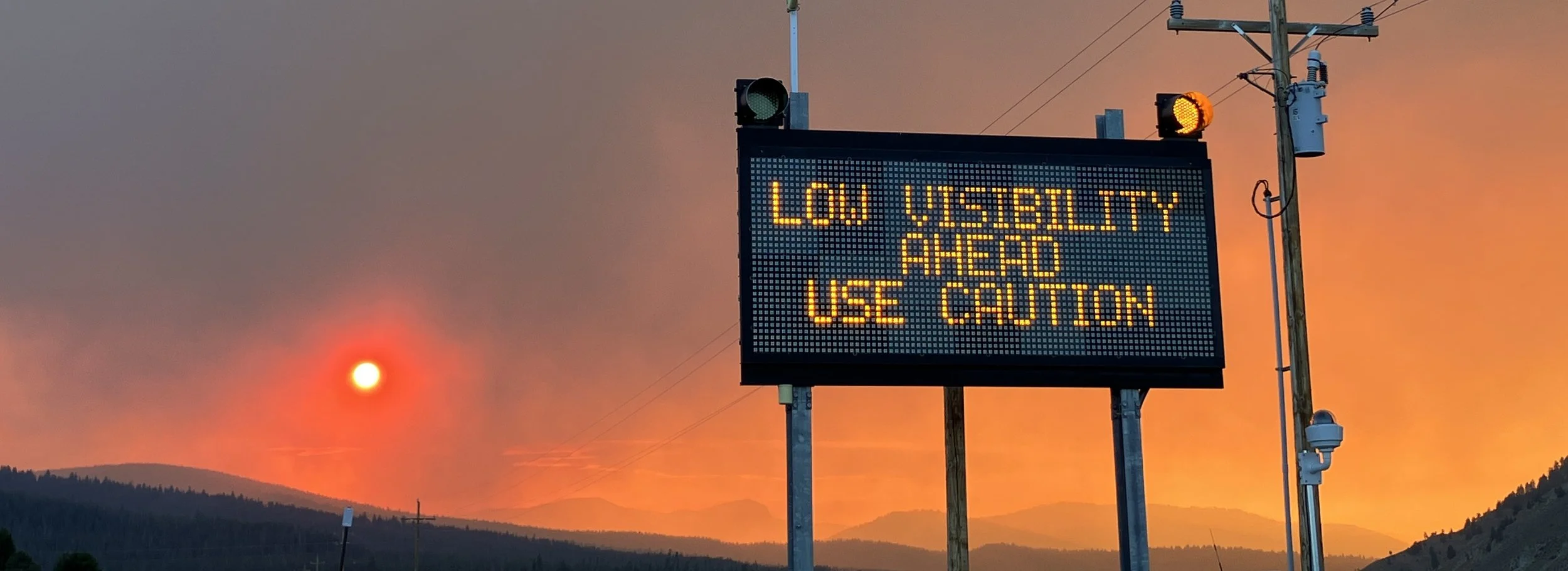
Ice still covered our driveway when we arrived home, but it was a warm day getting warmer and there would be standing water on the lawn by evening. A giant heat dome was moving over the American West, evaporating what was already a minimal snowpack. It’s going to be a killer summer, even if climate change is an officially forbidden concept.
In the meantime it was spring, and the sky was clear and the warmth of the sun felt good and life-giving. It felt good to be home. It felt good to sit down at my keyboard and begin typing. It even felt good, in the middle of hard problems, to be searching for a happy ending in a world hostile to them.
*Except for marrying Julie.